Your daughter just moved up to Level 5, and her coach mentioned she needs more beam time outside of practice. You’ve started shopping and quickly found that balance beams — the narrow, raised wooden or steel apparatus gymnasts walk, leap, and tumble on — come in a wildly wide price range: foam floor-level beams for $40, folding low beams for $120, and then a jump to the Tumbl Trak at $350–$450. That’s a real chunk of money, and the marketing copy on every product sounds equally confident. This article is the breakdown you need before you commit. We’ll walk through exactly what you get at the Tumbl Trak price point, where it earns its premium, and when a cheaper or more expensive option might actually serve your athlete better.
What the Tumbl Trak Beam Actually Is (and What It’s Not)
Tumbl Trak is a USA-based manufacturer best known for its air tracks and training aids; their balance beam line occupies the serious home-training and club-supplementary tier. It is not a competition beam — that’s a critical distinction worth making right away.
A competition-grade beam must meet USA Gymnastics equipment standards (outlined in the USA Gymnastics Equipment & Facility Standards document on usagym.org) and, at the elite level, FIG (Fédération Internationale de Gymnastique) apparatus certification. Those beams — sourced from manufacturers like AAI, Spieth America, or Janssen-Fritsen — run $1,500–$4,500+, feature suede or leather top surfaces, precisely calibrated flex, and steel leg structures rated for repeated high-impact dismounts at competition intensity.
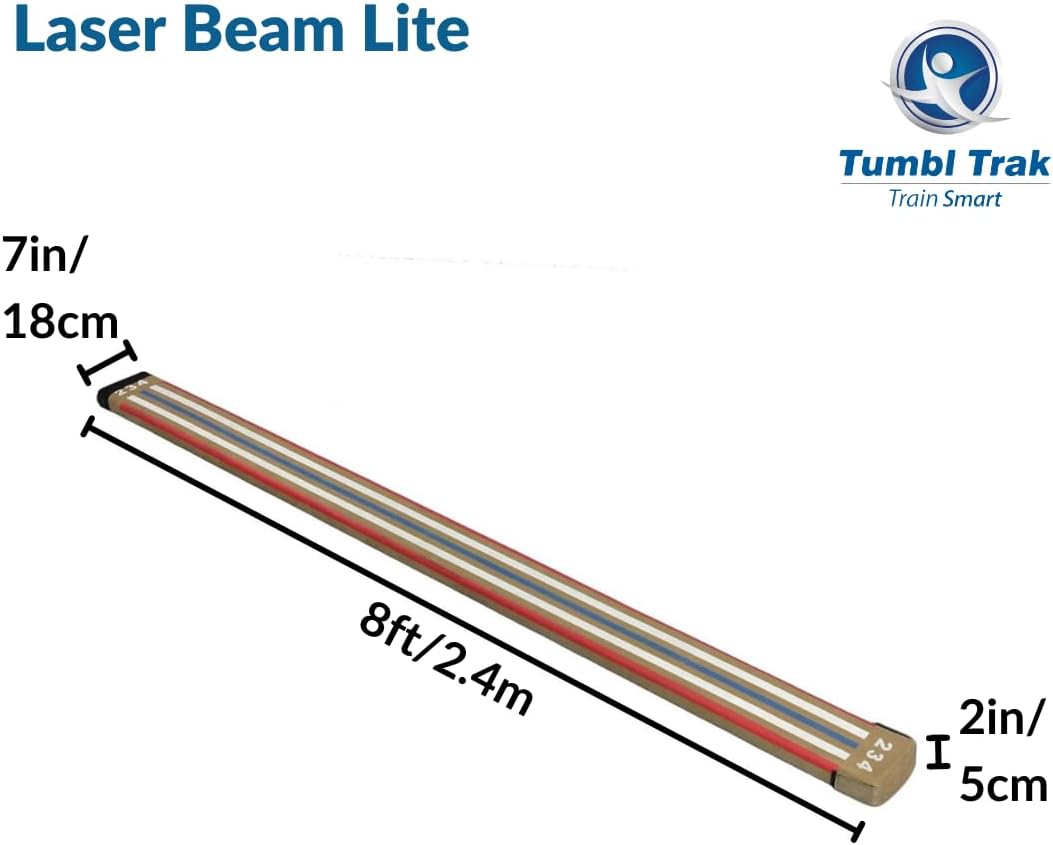
The Tumbl Trak beam is positioned below that tier, and it’s honest about that. Published specs put the beam surface at 4 inches wide (the regulation width for competitive beams), with a wood core and a padded, suede-style vinyl top cover. The low version sits roughly 8–12 inches off the ground; the full-height version reaches approximately 47–48 inches — close to competition regulation height (which USA Gymnastics standards set at approximately 125 cm / 49.2 inches at the top surface). That’s close enough to matter for skill development, but not identical.
The frame is steel with rubber foot pads. Across aggregated owner reviews on gymnastics parent forums and equipment retailer listings, the pattern is consistent: the beam assembles in under 30 minutes, holds stable on hardwood and mat surfaces, and does not wobble noticeably during cartwheel and back walkover training at Level 4–6 intensity.
Breaking Down the $350–$450 Price Tag
Here’s where the practitioner framing matters. At this price point you are making a tradeoff decision, not simply buying the “best” product. Let’s show the math.
By the numbers — beam tier comparison (2026 market pricing):
| Tier | Typical Price Range | Surface | Height | Intended Use |
|---|---|---|---|---|
| Foam floor beam | $30–$80 | Foam | Floor-level | Beginner, ages 4–7 |
| Low folding beam | $90–$160 | Vinyl/leather | 6–12 in. | Home beginner |
| Tumbl Trak full beam | $350–$450 | Padded vinyl/suede | ~47–48 in. | Serious home/club supplemental |
| American Athletic / AAI professional beam | $300–$600 | Leather/suede | Regulation | Competitive club training |
| FIG-rated competition beam | $1,500–$4,500+ | Certified leather | FIG regulation | Competition/elite training |
The Tumbl Trak lands in a crowded zone. Notice that American Athletic’s professional-grade beams — per American Athletic Inc. product specification sheets — can overlap the Tumbl Trak on price while offering a genuine competition-surface leather top and a frame rated for competitive training loads. That overlap deserves serious attention, and we’ll come back to it.
What Tumbl Trak does well in this range, based on published specifications and owner-reported feedback:
- Portability. The folding leg design means the beam stores flat in a garage or basement. Owners consistently report that breakdown takes about five minutes, which matters if the beam shares space with a car or a second use.
- Padding. The padded vinyl top is meaningfully more forgiving on feet and shins than a bare wood surface. For athletes working on new mounts or repeatedly practicing beam leaps, reviewers note that the cushion reduces skin abrasion compared to hard leather competition surfaces. This is a real advantage for high-repetition home training.
- Surface traction. Owners report the suede-style top grips bare feet and beam shoes well, with no complaints of unusual slipping in normal training conditions.
- Assembly quality. Multiple buyer reviews across gymnastics-specialty retail platforms describe the hardware and frame as solid, without the flex or creak complaints that appear frequently in reviews of beams below the $150 mark.
Where It Doesn’t Beat the Competition
The GymnasticsHQ beam buying guide notes a useful principle: if your athlete is competing at Level 5 and above, the feel of the beam surface matters for skill transfer. Competition beams have a harder, less forgiving surface — and training on a softer surface consistently can create a transition gap when the athlete hits the competition floor.
This is the honest tradeoff at the Tumbl Trak price point. The padded top that makes it comfortable for home training is the same feature that distinguishes it from what your athlete will feel in meets. It’s not a disqualifying flaw — plenty of coaches use padded beams deliberately for skill introduction — but it’s a real consideration for families whose athlete is training skills that will shortly be performed in competition.
Second tradeoff: frame height regulation. At approximately 47–48 inches to the top surface versus the ~49.2-inch regulation height, the difference is small but nonzero. Per USA Gymnastics Equipment & Facility Standards, competition apparatus must meet precise dimensional tolerances. Training slightly low isn’t dangerous, but athletes who exclusively train on a sub-regulation beam occasionally report adjustment challenges when competing. Again, not a dealbreaker — but worth knowing.
Third consideration: weight capacity and long-term load rating. Tumbl Trak’s published specifications indicate a weight capacity suitable for youth and teen gymnasts. The manufacturer does not publish the same competitive-use load ratings that AAI or Spieth America include in their institutional specification documentation. For a growing Level 7–9 athlete doing consistent flight series and dismounts, this is a real spec gap — the beam is not marketed or rated for that intensity, and operating it outside its design envelope is a durability risk.
The Real Competitor: American Athletic and AAI in the Same Price Band
If your budget is $350–$450 and you’re equipping a serious Level 5–8 athlete or a small club supplemental space, the Tumbl Trak is not the only option in that band. American Athletic Inc. and AAI both offer professional-grade low and full-height beams that, at their entry professional tier, intersect this price range — especially when purchased through gymnastics equipment distributors rather than consumer retail.
Per American Athletic Inc. specification sheets, their professional-series beams use genuine leather top surfaces, competition-spec wood cores, and steel frames rated for institutional training use. The tradeoff you accept versus the Tumbl Trak: less padding (harder on feet during high-rep home training), heavier and less portable, and typically less retail availability for individual family purchase.
The decision frame here is actually clean:
- If you’re outfitting a home training space for daily supplemental work at Level 4–6, and portability matters, the Tumbl Trak’s padded surface and fold-flat design earn their premium over the $90–$160 tier. The $350–$450 spend is justified by build quality, stability, and meaningful regulatory-width surface.
- If your athlete is Level 7+ and you’re investing in a dedicated training space or club supplemental beam, the dollars are better directed toward an American Athletic or AAI professional-series beam, even if the sticker price is similar or slightly higher. The competition-spec surface and load rating serve the athlete’s actual training needs better.
- If you’re a facility director or club coach sourcing multiple beams, the Tumbl Trak does not belong in your procurement spec. At institutional scale, Spieth America, AAI, and Janssen-Fritsen apparatus — all of which publish FIG certification documentation and institutional load ratings — are the appropriate reference class, as noted in USA Gymnastics equipment procurement guidance.
What Owners Actually Say (The Pattern Across Reviews)
Consumer Reports’ product durability methodology overview notes that aggregated owner feedback over 12–24 months of use is more predictive of real-world durability than initial impressions. Applying that lens to aggregated Tumbl Trak beam reviews across gymnastics retail platforms and parent communities:
- Satisfaction at the Level 4–6 home-use case is high. Owners consistently describe the beam as exceeding the quality of comparable-price alternatives, with surface and frame holding up well through 12–18 months of regular use.
- The padding compression question surfaces around the 18-month mark. A subset of long-term owners note the padded top softens with extended use, requiring occasional surface maintenance or eventual cover replacement. Tumbl Trak does offer replacement covers, which is a mark in their favor for long-term ownership cost.
- Frame stability under dismount loads is the most common durability complaint, and it appears primarily in reviews from older, heavier athletes using the beam for tumbling-level dismounts — exactly the use case the beam isn’t designed for.
The honest read: for its designed use case, the Tumbl Trak beam holds up. The durability concerns cluster around out-of-spec use.
The Decision Rule
You now have the framework. Here’s the clean if/then:
If your athlete is Level 4–6, training at home for supplemental beam time, age 8–14, and portability or storage constraints are real factors — then the Tumbl Trak at $350–$450 is a defensible spend and likely the best option in its tier.
If your athlete is Level 7+ or your family is willing to forgo portability for competition-spec surface feel — then redirect that same budget toward an entry professional-series beam from American Athletic or AAI, where the surface and load rating actually match the training demand.
If you’re a coach or facility director reading this while spec’ing club equipment — then the Tumbl Trak is off your list. Your procurement conversation belongs with Spieth America, AAI institutional sales, or Janssen-Fritsen, using their published FIG certification and institutional load documentation as the evaluation baseline.
The Tumbl Trak beam is a well-built product that does its stated job well. Whether it’s worth $350–$450 for your situation depends entirely on which of those three scenarios describes your athlete. Now you have the map.