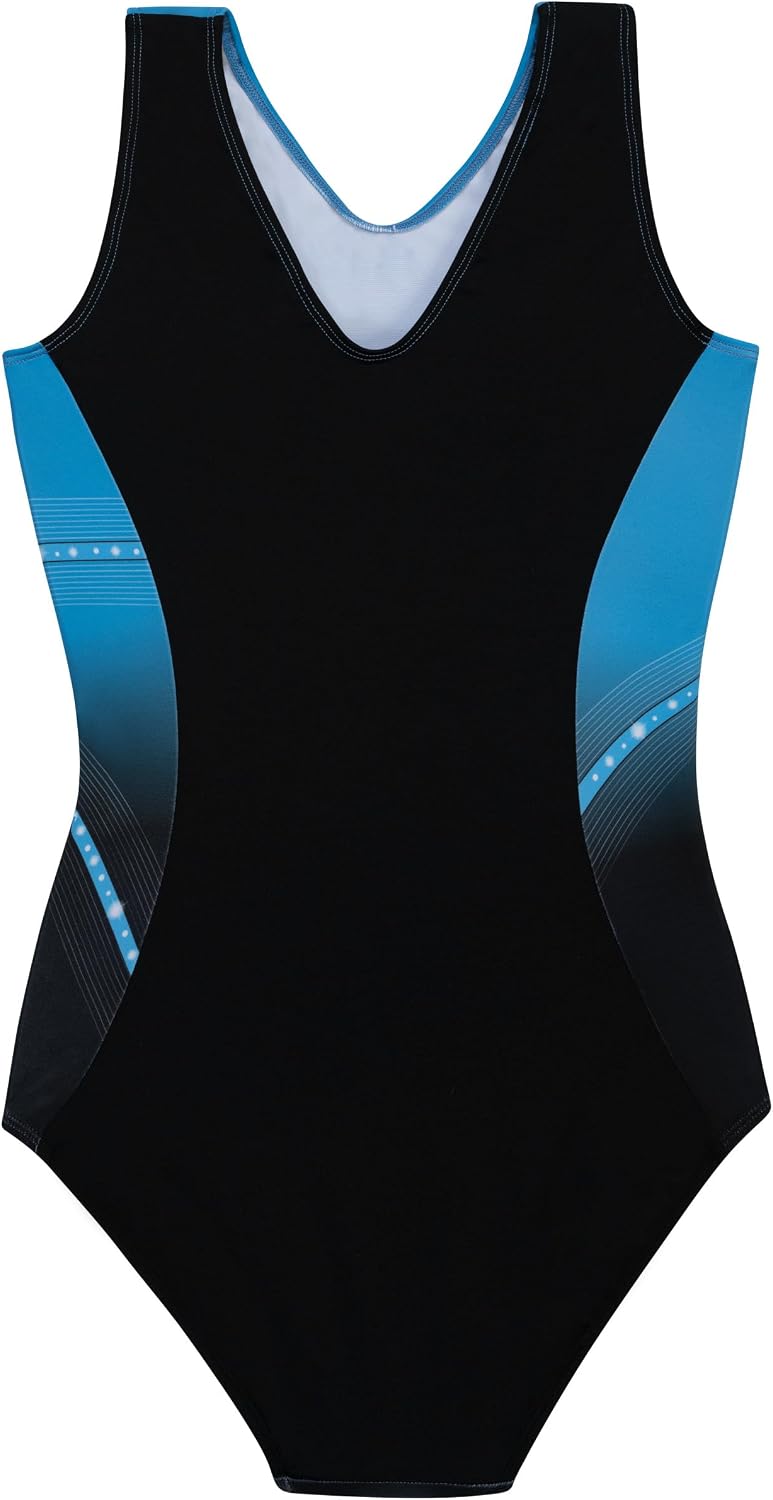
Your daughter just made the competition team — congratulations. Now her coach hands you a list, and somewhere near the top it says “competition leotard, GK Elite or approved equivalent.” If you’ve never bought a competition leotard (a one-piece performance garment designed specifically for gymnastics routines, typically made from stretch fabric with a snug, secure fit) before, the GK Elite size chart looks reassuring. It has numbers. It has columns. It feels like a solved problem. But ask any gym parent who’s been through a season or two, and you’ll hear the same thing: the chart is a starting point, not a finish line. Fabric cut, body proportion, and the specific silhouette of each GK Elite product line can put you a full size away from what the chart suggests. This guide walks you through the variables the chart can’t capture — so you order right the first time and avoid the scramble of a rush exchange two weeks before a meet.
Why the GK Elite Size Chart Leaves Gaps
GK Elite publishes a standard size chart organized around chest, waist, and hip measurements in inches, running from Child Small through Adult Large and into their extended range. Per GK Elite’s official size chart and fit guide (published on gkelite.com), the chart is built around average proportional bodies — meaning the ratios between chest, waist, and hip are assumed to fall within a fairly narrow band. That works well for a lot of athletes. It breaks down in three common scenarios.
Scenario 1: The athlete is “between” two measurements. A gymnast might measure squarely in a Child Large by chest but hit Adult Small at the hip after a growth phase. GK Elite’s chart gives you one size per measurement; it doesn’t tell you which measurement to prioritize, and the answer depends on the specific cut of the leotard you’re ordering.
Scenario 2: Different product lines within GK Elite fit differently. The Dreamlight collection, the Illusion series, and the classic Elite collection are not cut identically. The Dreamlight and similarly jewel-encrusted competition styles tend to use slightly more structured bodice panels, which affects how the garment distributes across the torso. Owners in aggregated reviews consistently report needing to size up by one in the Dreamlight line compared to their usual GK measurement, while the Illusion line tends to run closer to spec.
Scenario 3: Height-to-weight proportion diverges from chart assumptions. A gymnast who is tall and lean — common in Level 7–10 athletes — will often find that a size selected by chest measurement is too short in the torso (the distance from shoulder to crotch), causing the leotard to pull and restrict movement. The chart doesn’t publish torso-length data. This is probably the single most common fit complaint in the intermediate-to-competitive range, and it’s entirely invisible on the standard chart.
The GymnasticsHQ competition leotard buying guide notes that torso length is the measurement most families skip and most frequently regret skipping — and recommends measuring from the top of the shoulder, over the chest, down to the crotch as a cross-check against GK’s published chest-and-hip ranges.
The Measurements That Actually Matter (And How to Take Them)
Before you size, pull four measurements — not two. Here’s the working set:
| Measurement | How to Take It | Why It Matters for GK Elite |
|---|---|---|
| Chest | Fullest point across the bust, arms relaxed | Primary sizing anchor on the chart |
| Waist | Narrowest point of the natural waist | Secondary check; flags unusual torso proportion |
| Hip | Fullest point across the hips/seat | Critical for dancers’ cut and high-leg styles |
| Torso length | Shoulder top → crotch, over the body | Not on the chart; predicts pull and comfort |
Take measurements in a well-fitted base layer, not over clothing. For competitive athletes with visible muscle development in the shoulders and back — common by Level 6 and above — also take a back-width measurement across the shoulder blades. GK Elite’s racerback and open-back silhouettes in the competition range can run narrow across the upper back, and several reviewers on specialty gymnastics retail sites consistently flag this in the Illusion and Lace Perfection styles specifically.
By the numbers:
- GK Elite’s Adult Small begins at approximately 30–32” chest / 23–24” waist / 33–35” hip
- A 1” discrepancy between your measurement and the chart midpoint is within tolerance; 1.5”+ is a signal to evaluate the next size
- Torso lengths over 27” (shoulder to crotch) frequently require Adult sizing regardless of chest measurement
- Rush exchange windows at most authorized retailers run 7–14 days; competition schedules rarely accommodate a miss-and-reorder cycle
(Per GK Elite’s official size chart and fit guide, measurements are in inches; metric conversions are available on their site.)
Decoding the Product Line: Which GK Elite Styles Run True, Large, or Small
Not all GK Elite competition leotards behave the same way. Here’s the decision frame by product family, based on aggregated owner reports and the editorial comparison published by Vaulting Ambition:
Runs close to chart — order your measured size: The classic GK Elite competition leotards in the standard nylon-spandex construction — particularly styles without heavy rhinestone or mesh overlay panels — tend to align well with the published chart. If your four measurements all land clearly in one size column, these are safe to order to chart.
Tends to run snug through the torso — consider sizing up one: Styles with significant mesh paneling (any GK Elite style using an inset mesh yoke or full-front mesh overlay) consistently draw reports of a tighter-than-expected torso fit. The mesh fabric has less give in the vertical direction than the base nylon-spandex. If your torso measurement is at the top of a size range, move up. If you’re between sizes and the style has mesh paneling, move up.
Structured bodice styles — size by hip, not chest: GK Elite’s higher-end competition styles using structured front panels or boned bodice inserts (common in team competition packages ordered through club accounts) are cut to hold their shape. These fit more like a garment with inherent structure than a stretch leotard. Owners and coaches ordering team quantities report that hip measurement is the more reliable sizing anchor for these styles — going up one size to accommodate the hip typically produces the right overall fit, with the structured bodice adjusting to the torso rather than pinching at the hips.
Child vs. Adult sizing crossover: This is a genuine decision point, not just a number. A gymnast measuring at the top of Child Large is often better served by Adult XS or Adult Small than by the chart’s suggestion to stay in Child sizing. Per GK Elite’s own fit documentation, the Adult range is cut with a slightly longer torso and slightly more developed hip-to-waist ratio. For athletes going through growth phases in the 10–13 age range, the Adult XS frequently fits better than Child Large even when the raw numbers look equivalent.
The USA Gymnastics Compliance Variable
This matters more than most families realize at ordering time. USA Gymnastics publishes apparel guidelines (per usagym.org’s athlete apparel and competition guidelines) that specify acceptable coverage, construction, and appearance standards for sanctioned competitions. GK Elite’s competition leotards are designed to meet these standards — but fit affects compliance.
Specifically: a leotard that is too small will ride up at the leg and seat, which can draw a deduction at the judge’s discretion in some competitive levels. A leotard that is too large in the torso can gap at the back or create visible bunching, which carries similar risks. The fit standard is “secure and smooth across all movement ranges” — which means the leotard needs to stay in place through a full back walkover, a release move on bars, and a running hurdle on vault.
The practical implication: if you’re making a final size call between two options, default to the one where the torso and hip fit is secure. A leotard that is slightly generous through the chest is less of a competition risk than one that pulls or gaps during dynamic movement.
The If-X-Then-Y Decision Rules
You’ve got your four measurements. Here’s where to land:
If all four measurements fall cleanly in one column: Order that size. This is the 30% of cases where the chart works exactly as advertised.
If chest and hip land in different size columns: Size by hip if the style has any structured, mesh, or overlay paneling. Size by chest if it’s a plain nylon-spandex construction — then verify that the torso length falls within range for that size.
If torso length is at or above the top of a size’s published range: Move up one size regardless of other measurements. Torso pull is the hardest fit problem to live with in competition and the easiest to prevent at ordering time.
If the athlete is at the Child Large / Adult XS crossover: Default to Adult XS for gymnasts in growth phases. The slightly longer torso and more developed cut will extend usable wear time through the season.
If you’re ordering for a team or class and can’t get individual fittings: Order a half-size up from chart. The consistency of a snug-but-not-restrictive fit across the group is more reliably achieved by erring generous than by erring tight. Team coordinators ordering through GK Elite’s club accounts can request a sample size kit in advance of a bulk order — a step that veteran coaches report saves one to two exchange cycles per season.
If the competition date is within three weeks: Contact the retailer before ordering to confirm their exchange window. Most authorized GK Elite dealers operate on 14-day exchange policies for unworn, tagged garments. Three weeks is workable; two weeks or less is a risk that warrants a phone call before you click purchase.
The chart is a reasonable map. But the territory — your athlete’s specific proportions, the specific construction of the leotard you’re ordering, and the fit standard required for competition — has more detail than any chart can carry. Measure four times, match to the right product-line behavior, and apply the decision rules above. That’s how you get from “size chart” to “fits right on meet day.”