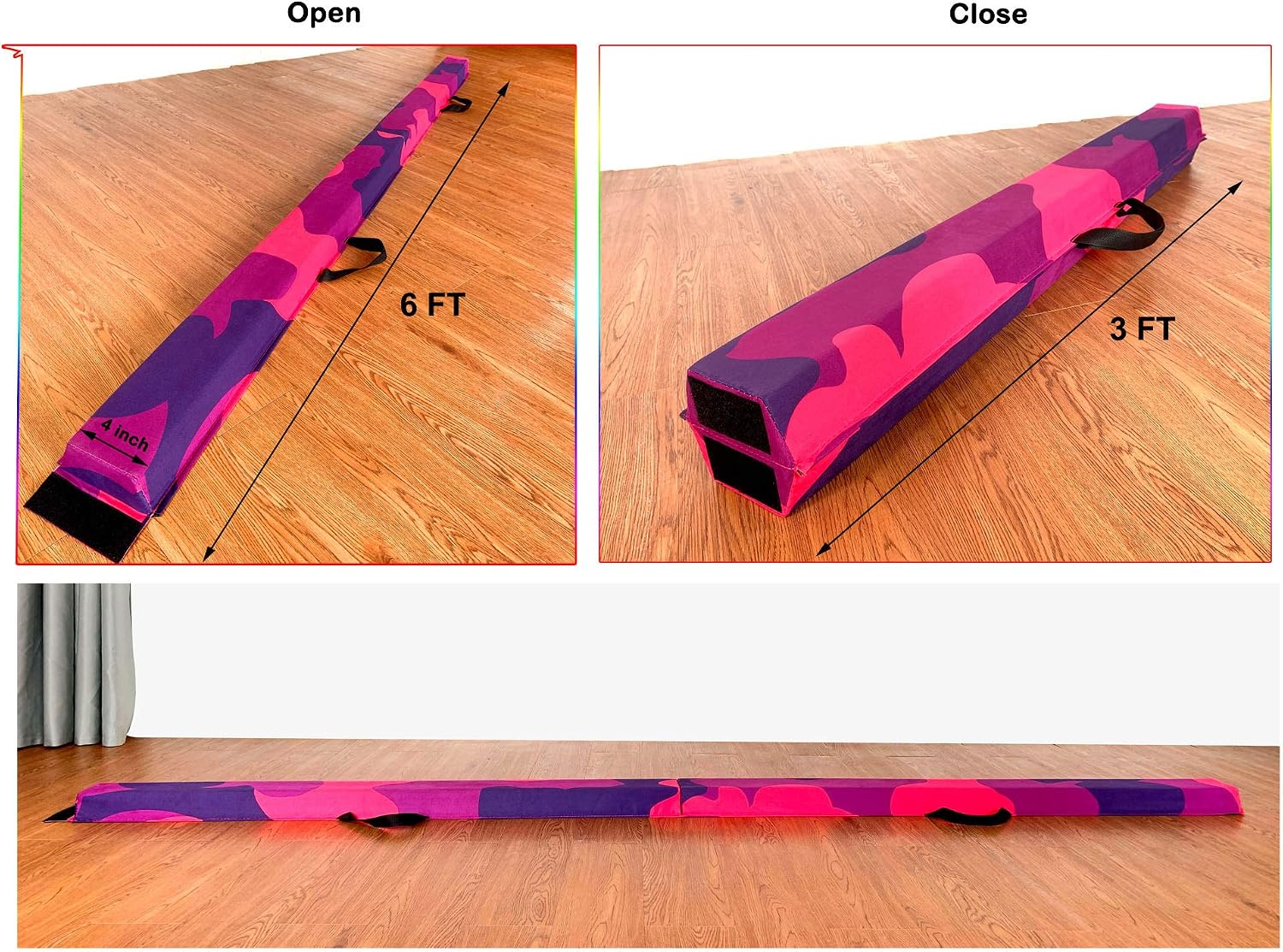
So your kid came home from gymnastics class walking heel-to-toe along every curb, every parking lot stripe, every slightly raised edge in the grocery store — and now they want a balance beam at home. You’re somewhere between “that’s adorable” and “how much is this going to cost me?” The good news: a solid first beam does not require a serious investment. A balance beam, in simple terms, is a raised, narrow platform (usually 4 inches wide) that gymnasts walk, jump, and eventually flip across during training and competition. At the beginner level, “raised” might mean just two or three inches off the ground, which is exactly where you want to start. This guide will walk you through every real tradeoff in the under-$60 market — foam vs. wood, floor-level vs. legs, width and length — so you can make a confident call without wasting money on a beam your child will outgrow in six months or, worse, one that isn’t safe.
What “Under $60” Actually Gets You in 2026
Let’s set honest expectations before we look at specific products. The sub-$60 price tier covers two distinct categories of beginner beam, and confusing them is the most common mistake parents make.
Category 1: Low-profile floor beams (foam or wood, no legs) These sit flat on the ground — or just an inch or two above it — and are designed purely for skill repetition at zero fall risk. They’re the most appropriate choice for children who are genuinely new to gymnastics: beginners working on straight-line walking, relevés (rising onto the balls of the feet), and basic jumps. Foam versions in this category run roughly $25–$45. Entry-level wood floor beams with a suede or carpet top surface land in the $40–$60 range.
Category 2: Low-leg raised beams (typically 6–12 inches off the floor) Some manufacturers sell beams with short folding legs in this price bracket. The appeal is obvious — a “real” beam at a starter price — but reviewers at GymnasticsHQ consistently flag that the leg hardware on many sub-$60 raised beams is the weakest link, with wobble and leg-lock failures reported in long-run use. If a raised beam is the goal, most coaches and equipment reviewers recommend spending closer to $100–$150 to get stable leg hardware.
The honest summary: Under $60, buy a floor beam and buy it with full confidence. Don’t try to buy a raised beam at this price point unless you’ve read the reviews very carefully.
By the Numbers
| Beam Type | Typical Price (2026) | Height Off Floor | Best For |
|---|---|---|---|
| Foam floor beam | $25–$45 | 0–2 in | Ages 3–7, absolute beginners |
| Wood/suede floor beam | $40–$60 | 1–3 in | Ages 6–10, skill repetition |
| Low-leg raised beam | $55–$80 | 6–12 in | Use caution — verify hardware |
| Club-grade home beam | $100–$300 | 12–18 in | Serious pre-team athletes |
The Four Specs That Actually Matter at This Price Point
When you’re comparing beams in this range, most of the marketing language — “premium quality,” “gym-grade,” “professional design” — is noise. Here are the four numbers and features worth your attention.
1. Surface Material: Foam vs. Suede vs. Carpet
The top surface of a beginner beam determines grip and skin friction during falls, which matters more than most parents realize.
Foam: The softest landing on a roll-off, and the most forgiving for very young children. The tradeoff is durability — foam compresses and tears faster than wood under repeated use, and owners consistently report visible wear within 12–18 months of daily practice. Fine for a 4-year-old who uses the beam a few times a week.
Suede-wrapped wood: The closest analog to what your child uses in the gym. Suede offers real grip for bare feet and gymnastics slippers (the thin shoe worn in some beginner classes). Published specs on most entry-level suede beams put the wood core at around ¾-inch plywood, which is adequate for floor-beam use. Reviewers at GymnasticsHQ rate suede-top beams as the best all-around choice for children ages 6 and up who are taking classes.
Carpet-top: Common on the lowest-price beams. Carpet is durable but can snag bare toes, and it doesn’t replicate the gym surface, so some coaches prefer children practice barefoot on suede. That said, carpet is perfectly safe and a reasonable budget choice.
2. Length: 6 Feet vs. 8 Feet
A competition beam is 16 feet long. That’s not what we’re buying here. In the sub-$60 tier, you’ll typically see 6-foot and 8-foot options.
6 feet is enough for walking sequences, relevés, and simple jumps. It fits in a bedroom or small living room without furniture rearrangement.
8 feet gives more runway for basic combinations and is easier for a child to stay oriented on during longer sequences. It requires more floor space — plan for at least 10 feet of clearance — but if your space allows it, the extra length is worth it. Per the American Academy of Pediatrics’ gymnastics safety guidance, fall zones around any training apparatus should be kept clear of furniture, walls, and hard surfaces.
3. Weight Capacity
Every beam in this category should list a rated weight limit. For children under 10, you’ll rarely stress even a basic foam beam — most are rated to 100–150 lbs. The weight limit matters more if an older sibling or a parent plans to step on the beam to demonstrate a skill. Check the spec sheet before purchase; manufacturers publish these figures and they’re worth a 10-second review.
4. Non-Slip Feet or Base
For a floor beam, the base matters. Beams that slide on hardwood or tile floors mid-skill are a genuine hazard. Look for rubber-grip feet or a rubberized base strip on the underside. This detail is often buried in the product description; Consumer Reports’ broader guidance on children’s sports equipment consistently emphasizes checking anti-slip features before any other aesthetic consideration.
Who Should (and Shouldn’t) Buy in This Tier
This section is the decision frame — the if/then matrix that saves you from buying the wrong beam twice.
If your child is 3–6 and in a recreational gymnastics class for the first time: A foam floor beam in the $25–$40 range is the correct call. Don’t spend more. The skill ceiling on a floor beam is surprisingly high for this age group, the fall consequence is minimal, and they may lose interest before they outgrow it. A foam beam is a low-stakes experiment that often turns into a genuine training habit.
If your child is 6–10, has been in class for 6+ months, and practices cartwheel-level skills: Step up to a wood/suede floor beam at $40–$60. The surface replication matters more now that they’re developing muscle memory for foot placement. Owners report that children at this stage use the beam far more consistently when the surface feels like their gym beam.
If your child is on a pre-team or competitive track: Stop here and reconsider the budget. A floor beam is still useful for conditioning and skill repetition, but a competitive-track athlete needs a raised beam — ideally at proper competition height (about 47 inches for artistic gymnastics, per USA Gymnastics equipment standards) or at least a meaningful practice height of 12–18 inches. That puts you in the $150–$350 range for quality options. GymnasticsHQ’s equipment reviews consistently recommend American Athletic or Tumbl Trak for this use case, and those products sit well above the $60 ceiling. Buying a $55 wobbly-leg beam for a Level 4 athlete is a false economy.
If you have a garage or basement and want a “real” setup someday: Buy the floor beam now as a bridge product. Use it for 6–12 months, let your child’s commitment and skill level clarify themselves, then invest in a proper raised beam with confidence. This is the approach most experienced gymnastics parents take, and it avoids the common regret of spending $200 on a raised beam that ends up as a laundry hanger.
Safety Checklist Before Your First Practice at Home
Regardless of which beam you choose, a few environmental factors matter as much as the product itself.
Matting underneath and around the beam. A cartwheel mat (the thin folding foam mat — typically 4 feet wide and 2 inches thick — used for at-home skill practice) placed alongside the beam catches side falls. For a floor beam, even a yoga mat on either side provides meaningful cushioning. USA Gymnastics’ safety course materials emphasize landing zone preparation as the first priority in any home training setup.
Clearance. Measure a 3-foot fall zone on all sides of the beam before your child’s first session. Furniture corners are the hazard that parents consistently underestimate.
Supervision. The American Academy of Pediatrics is unambiguous on this point: beginner gymnasts at home should have adult supervision, particularly when learning new skills on any apparatus, even a floor-level beam.
No shoes with hard soles. Bare feet or gymnastics slippers only. Street shoes on a suede beam accelerate surface wear and reduce grip unpredictably.
The Bottom Line
The sub-$60 beam market is genuinely useful if you match the product to the athlete. A foam beam for your curious 5-year-old, or a wood/suede floor beam for your dedicated 8-year-old, is a legitimate training tool — not a toy compromise. The trap is trying to buy a raised beam at this price point; the hardware at this tier typically doesn’t hold up, and reviewers are consistent on that point.
The one-sentence decision rule: If your child is in recreational gymnastics and not yet on a competitive track, a floor beam under $60 is the right call and will serve them well. If they’re pre-team or above, the floor beam is a useful supplement — but it shouldn’t be the only beam in the budget conversation.
Buy the beam that matches where your kid actually is today, not where you hope they’ll be in two years. Gymnastics has a way of clarifying that timeline all on its own.